Dutch Postcode Internet Availability Check
Why your exact address dictates your available speeds, and how to verify your connection before signing a lease.
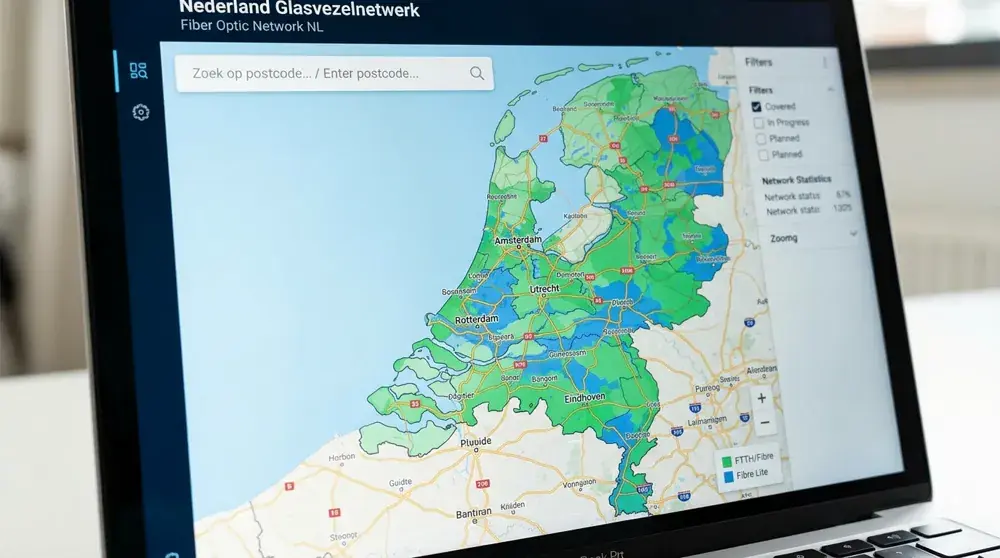
When searching for a new rental apartment or purchasing a house in the Netherlands, one of the most critical checks is verifying your telecommunication options. While the Netherlands boasts over 98% high-speed broadband coverage, available transmission technologies differ dramatically between neighborhoods, streets, and even adjacent apartment buildings.
How the Dutch Postcode System Works
A Dutch address is uniquely defined by:
- Postcode: 4 numeric digits followed by 2 uppercase letters (e.g.,
1012 JS). Each postcode represents a cluster of approximately 20 to 25 houses on a street. - Huisnummer (House Number): The building number (e.g.,
42). - Huisnummertoevoeging (Addition): Crucial for apartments and canal houses with multiple flats (e.g.,
-A,-B,-II, or-hsfor ground floor / huis).
Who Owns the Underground Lines?
In many countries, one telecommunications company controls all infrastructure. In the Netherlands, the market is competitive and multi-layered:
- KPN Netwerk NL & Glaspoort: The largest fiber operator in the country, actively replacing old telephone copper lines with fiber optics in both cities and rural areas.
- Open Dutch Fiber (ODF): A major private fiber infrastructure builder working in close partnership with Odido to roll out fiber in major metropolitan areas like Amsterdam, Utrecht, and The Hague.
- Delta Fiber: The dominant fiber and cable infrastructure provider in Zeeland, South Holland, and substantial portions of Gelderland and Overijssel.
- Ziggo (VodafoneZiggo): Operates the national hybrid fiber-coax cable network reaching over 90% of Dutch residences.
Check Before You Sign a Rental Lease
Always ask your prospective landlord or rental agency for the exact postcode and house number addition before signing a tenancy contract. Running an instant postcode check on Mobiel.nl confirms whether you can get symmetric 1 Gbps fiber or must rely on cable or 5G home internet.
Frequently Asked Questions
Practical answers to common questions about Dutch internet contracts, speeds, and installation.
In the Netherlands, broadband infrastructure is physically tied to underground cabling laid under streets and pavements. Different neighborhoods have access to different physical networks (e.g. KPN fiber, Open Dutch Fiber, Delta coax/fiber, or legacy copper). Your 4-digit and 2-letter postcode identifies which lines reach your meter cupboard.
This is common in newly deployed fiber zones. The fiber cable is under the sidewalk, but the home installation connection (FTU) has not been brought inside. If you place an order with a fiber provider, they will schedule a civil engineering contractor to pull the fiber under your garden/pathway and mount the wall socket at no extra charge.
Yes, but allow extra lead time. Newly built properties require registration in the national BAG (Basisregistratie Adressen en Gebouwen) register. Once registered, network operators allocate the connection line.
Related Guides & In-Depth Comparisons
Explore more practical advice on Dutch telecommunication networks, hardware setup, and cost savings.
Need a hand choosing?
Still comparing options? Our Internet Netherlands overview puts fiber, cable, 5G and budget plans side by side, and the speed calculator tells you which tier you actually need.